Roster turnover defines modern college basketball. But some players stay put, and the data says these returners are built to make real noise next season.
Every offseason, the portal takes center stage. Commitments drop, rosters flip, and the storylines write themselves. But some of the most important players heading into 2026-27 are the ones who never left.
Using ShotTracker Scout’s AI-driven scouting platform, we identified eleven returners across ShotTracker partners in college basketball whose production, efficiency, and developmental trajectory make them must-watch names next season.
The Power Conference Headliners
JT Toppin, Texas Tech | ShotTracker Season Rating: 85.1
Before a late-season ACL tear cut his year short, Toppin was one of the most dominant players in the country. His 21.8 points and 10.8 rebounds per game on 54.7% shooting put him in nightly 20/10 territory in the Big 12, and he was just getting started.
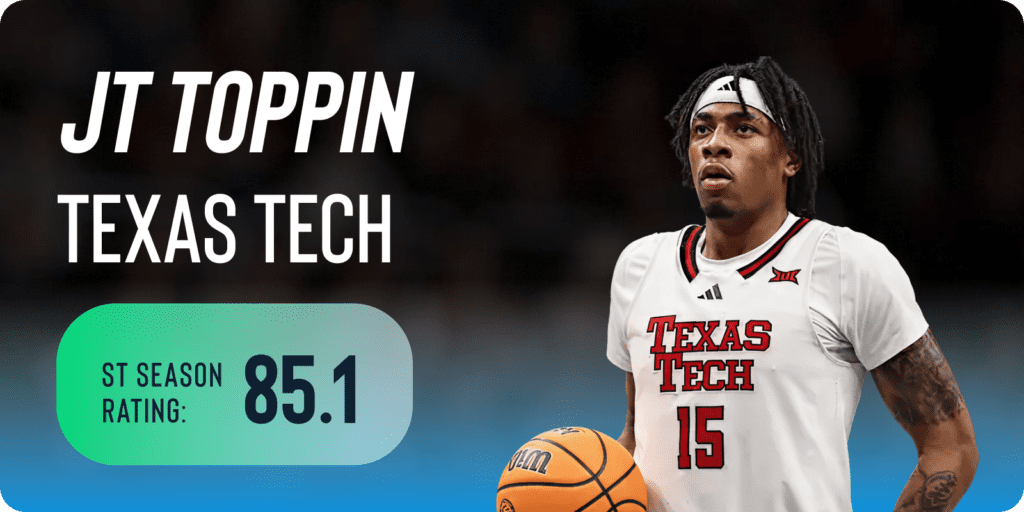
The entire conversation around Texas Tech next season centers on his recovery timeline. If Toppin returns at full strength, the improvements most likely to push him to the next level are his 57.9% free throw shooting and 28.1% from three. Clean those up and Big 12 Player of the Year is not a stretch. Preseason POTY conversations will follow.
Barrington Hargress, Colorado | ShotTracker Season Rating: 80.8
After transferring from UC Riverside following the 2024-25 season, Hargress wasted no time proving his production translated at the highest level. His 14.8 points and 4.5 assists per game came on 53.3% from the field, 48.1% from three, and 83.5% from the line, numbers that signal elite efficiency across every phase of his game.
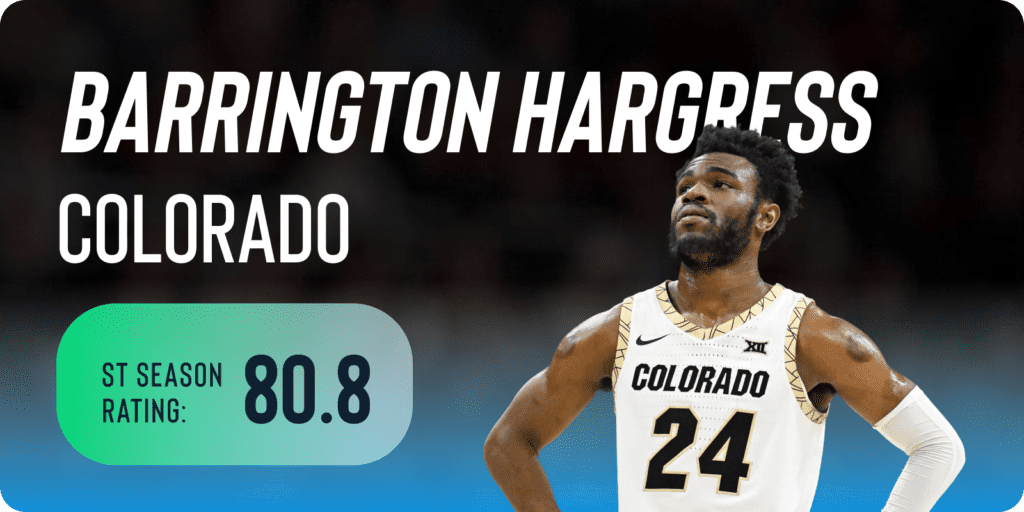
His 4.5-to-1.2 assist-to-turnover ratio tells the deeper story: this is a point guard who makes good decisions with the ball. Even with some expected regression in his shooting percentages, he projects as a 17 to 18 point per game scorer and one of the most reliable creators in his conference.
Rob Wright III, BYU | ShotTracker Season Rating: 80.3
Wright emerged last season as one of the most complete guards in the country. His 18.1 points and 4.6 assists per game came on 46.7% shooting overall and 41.7% from three, numbers that hold up against anyone at his position in the Big 12. The 2.2 turnovers per game are the one area worth monitoring, but the overall picture is a guard who functions as a genuine offensive engine.
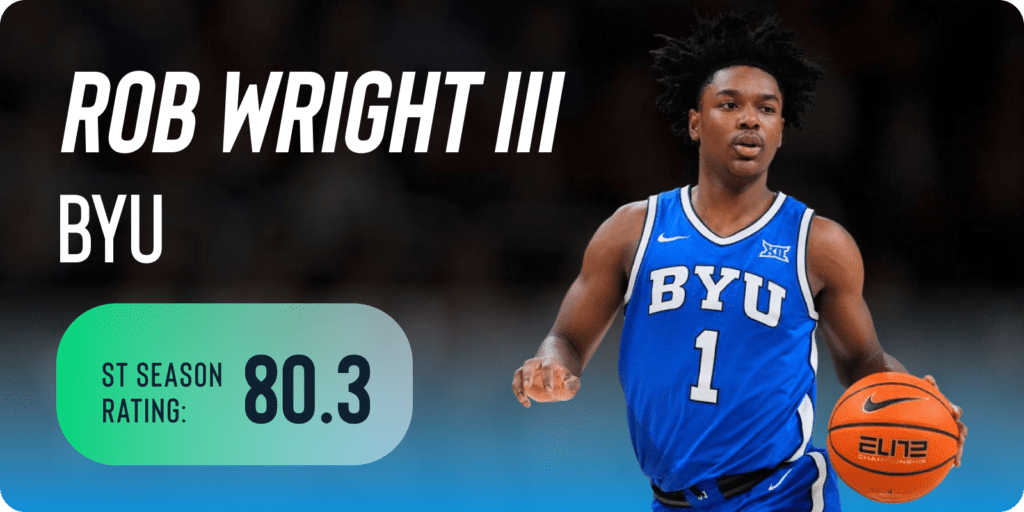
A 20-point All-Big 12 season is realistic. Another year running BYU’s offense with that efficiency profile could make it inevitable.
Players on the Verge of a Breakout
Jasen Green, Creighton | ShotTracker Season Rating: 77.9
Green made one of the most significant individual leaps in the country last season, going from a developmental piece to a 10.5 points and 6.3 rebounds per game contributor while shooting 54.4% from the floor. What makes his growth particularly compelling is the range of his impact: he added 2.4 assists and 30 blocks alongside improved perimeter shooting at 35.1% from three.
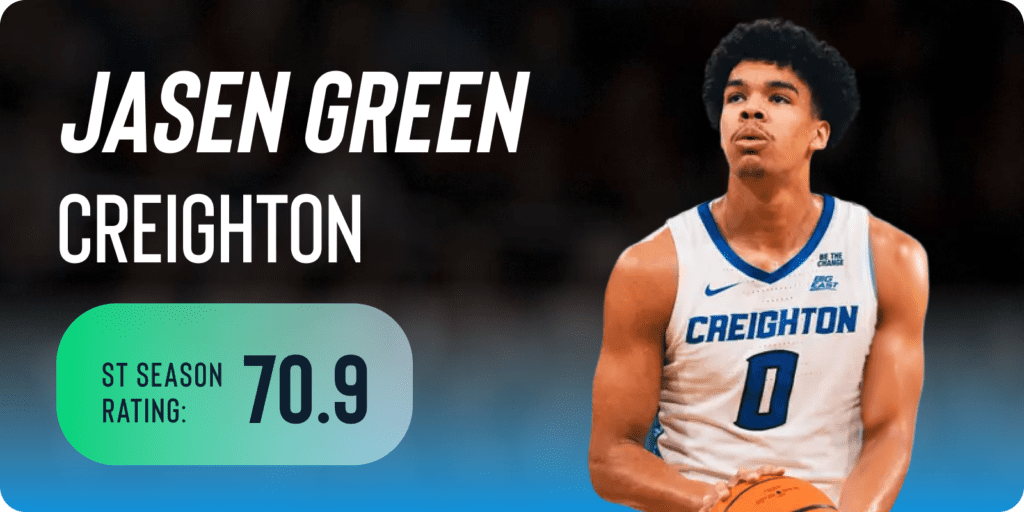
A true stretch-4 with playmaking and rim protection is a rare combination. Another year of shooting development puts him squarely in the All-Big East conversation at 13 to 14 points per game.
Jeremy Fears Jr., Michigan State | ShotTracker Season Rating: 77.6
Fears Jr. ran Michigan State’s offense last season as well as any point guard in the Big Ten, putting up 15.1 points and an elite 9.2 assists per game across 37 games while maintaining a 3.7-to-1 assist-to-turnover ratio. That combination of volume playmaking and low mistakes is rare at any level.
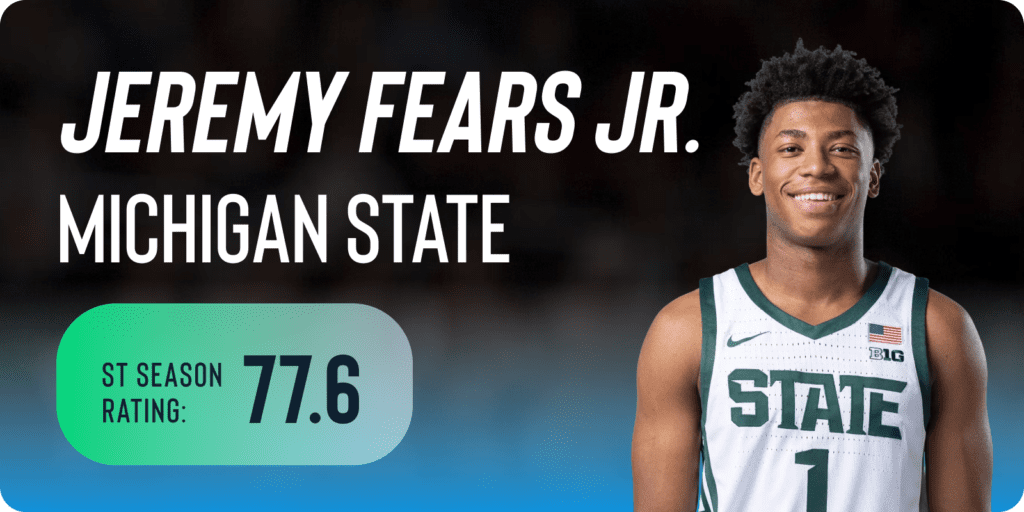
The single swing variable heading into 2026-27 is his three-point shooting at 32.7%. Pushing that number into the mid-30s transforms him from one of the best floor generals in the conference to a legitimate Naismith Player of the Year candidate. The playmaking infrastructure is already there.
Xavier Edmonds, TCU | ShotTracker Season Rating: 77.4
Edmonds did things last season that do not always show up prominently in a box score. His 12.8 points and 6.5 rebounds per game on 57.2% shooting were efficient, and the 43.6% from three in limited volume suggests a shooter who could handle more attempts without losing accuracy. Add 34 steals and 32 blocks and the defensive versatility becomes as interesting as the offensive upside.
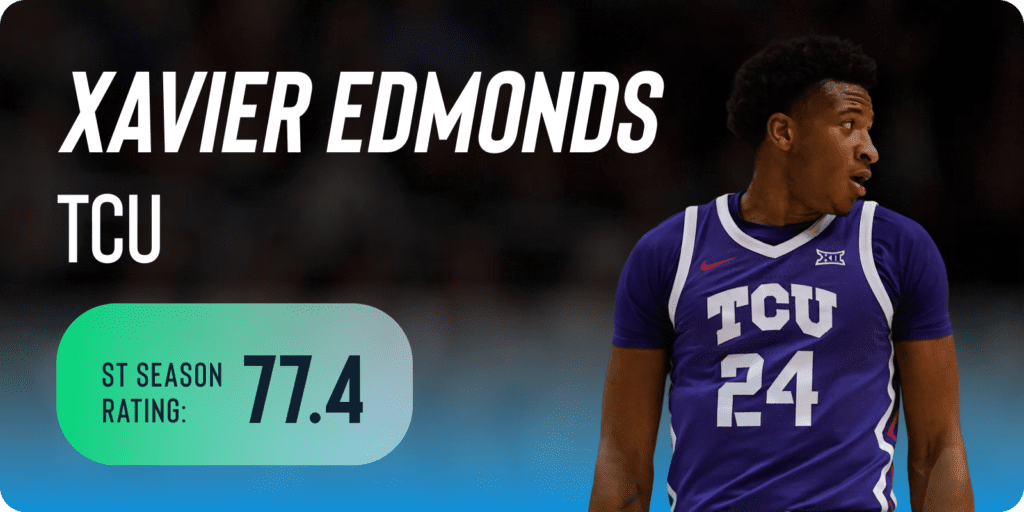
David Punch’s departure opens the door for Edmonds to step into a featured role. A 15-point and 8-rebound season is achievable, and the tools to get there are already in place.
Roman Domon, Murray State | ShotTracker Season Rating: 76.4
Domon brings a well-rounded skill set to Murray State’s rotation, averaging 14.2 points and 5.2 rebounds per game while shooting 47.4% and 36.3% from three. Getting to the line 222 times last season demonstrates both aggression and the ability to draw contact consistently.
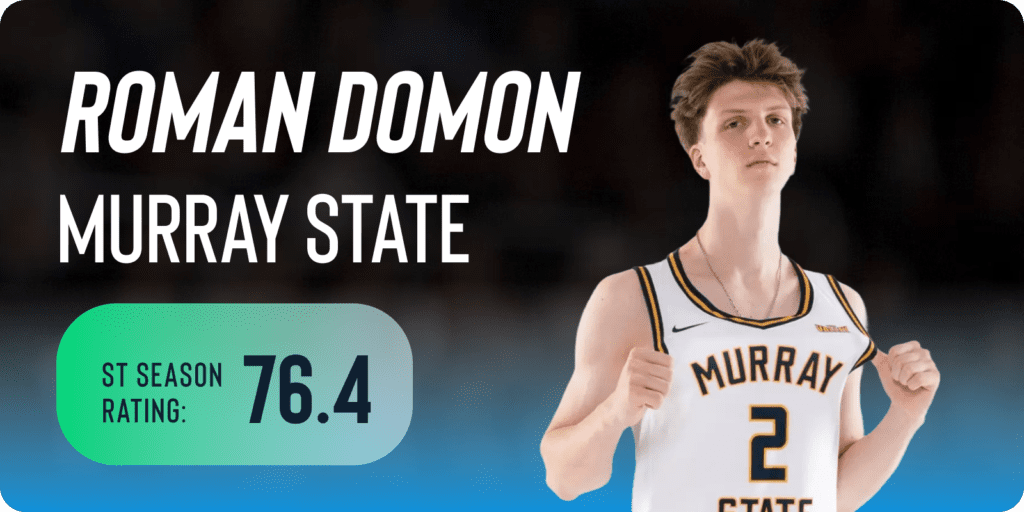
With increased usage and continued development, his scoring average has a clear path toward 16 to 17 points per game. At that level, Domon becomes one of the more complete forwards in his conference.
The Anchors: Interior Players Who Change Games
Motiejus Krivas, Arizona | ShotTracker Season Rating: 76.9
Krivas anchors Arizona’s interior with 10.4 points, 8.1 rebounds, and 1.9 blocks per game on 56.9% shooting, and the 119 offensive rebounds he grabbed last season illustrate how relentlessly active he is around the basket. His 78% free throw shooting separates him from most centers, making him a reliable target late in games.
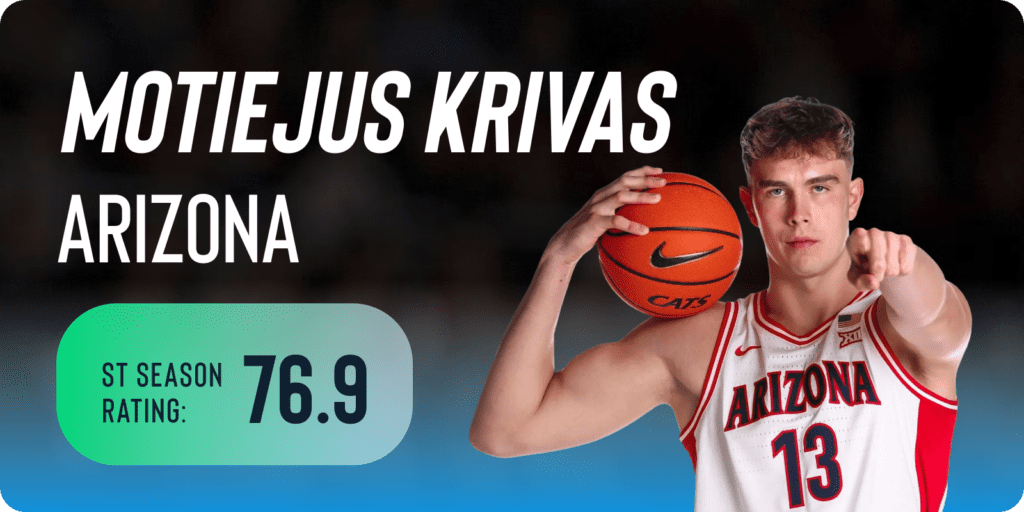
A 13 points and 9 rebounds ceiling is realistic, and his defensive impact already makes him one of the leading candidates for Big 12 Defensive Player of the Year.
JoJo Tugler, Houston | ShotTracker Season Rating: 76.4
Tugler embodies everything Houston’s program is built around. His 8.4 points and 5.3 rebounds per game on 57.6% shooting come with 113 offensive rebounds and a defensive impact that includes 55 blocks and 47 steals. That combination of productivity and motor defines Houston’s identity on both ends of the floor.
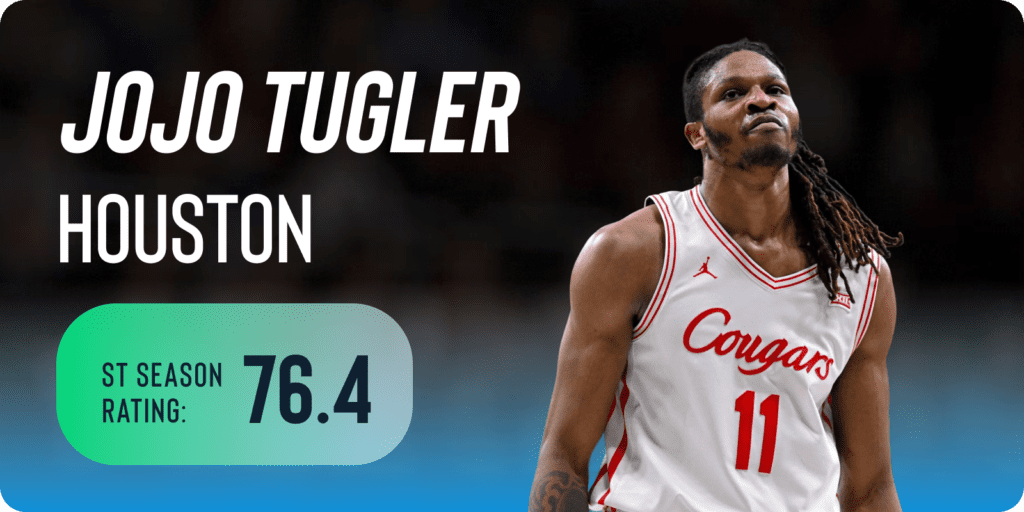
The jump to 70.7% from the free-throw line raises his ceiling considerably. A 10 to 12 point, high-impact two-way season is where the data projects him, and that kind of production makes him invaluable within Houston’s system.
Blake Buchanan, Iowa State | ShotTracker Season Rating: 76.2
Buchanan remains one of the cleanest finishers in this group, converting 63.6% of his field goal attempts while averaging 8.5 points and 5.7 rebounds with just 1.1 turnovers per game. His role within Iowa State’s system suits him well: he does not need a heavy usage share to make a real impact.
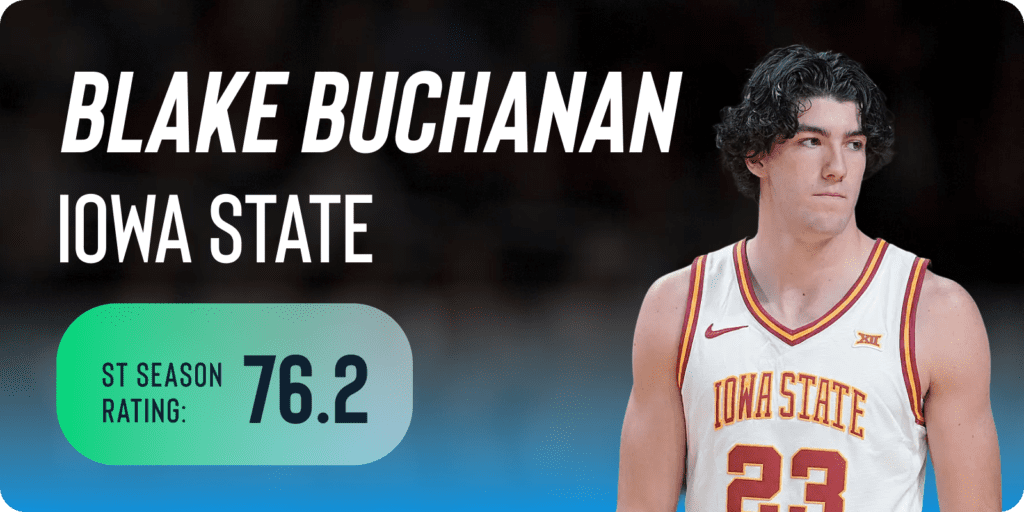
The area that limits his ceiling right now is 49.4% free throw shooting. Improvement there gives Iowa State a more reliable option in late-game situations and opens up a broader offensive role as the program navigates its own identity shift this offseason.
Ivan Kharchenkov, Arizona | ShotTracker Season Rating: 76.0
Kharchenkov rounds out the Arizona returners as a versatile forward who contributes across multiple categories: 10.4 points, 4.3 rebounds, and 2.3 assists per game with 54 steals highlighting his defensive activity. His value to Arizona’s offense comes largely through his ability to connect plays with smart passing rather than isolation scoring.
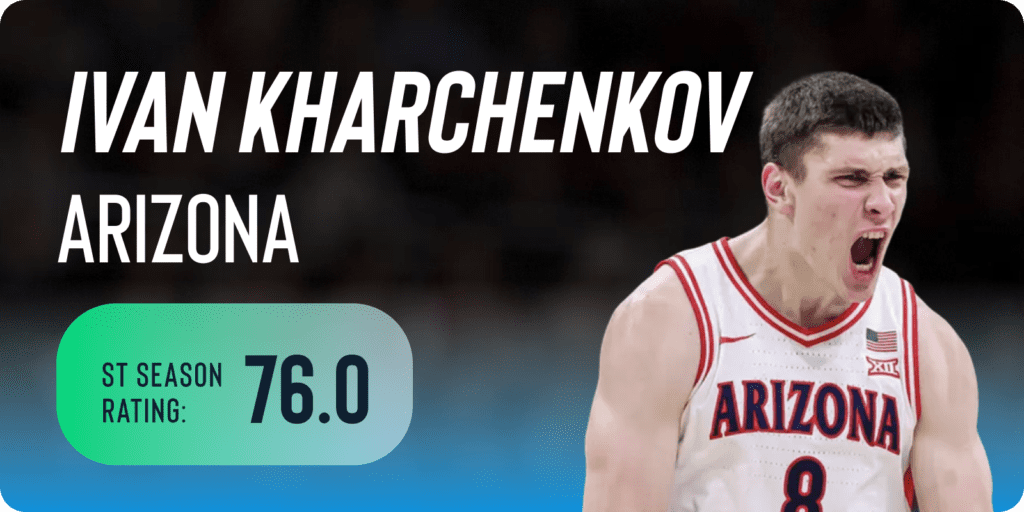
If his three-point shooting (31.7%) develops and he becomes more assertive as a scorer, Kharchenkov has the tools to become a genuine matchup problem. The building blocks are there. The next step is taking them.
These are not players who need to reinvent their games. They are players who already have the foundation. The question next season is how far they take it.
Want to see how your program’s returners stack up? ShotTracker Scout runs the same analysis for every roster on your schedule. See what the data says at ShotTracker.