Scoring averages tell you how much a player produced. Zone scoring tells you where. A player who generates most of their points in the restricted area is a fundamentally different offensive threat than one who operates in the midrange or along the perimeter, and understanding that distinction matters when you are evaluating portal fits, building a game plan, or trying to figure out what a team loses when a key player leaves.
ShotTracker tracked every Division I field goal attempt in 2025-26 and identified the top scorers in each of the 13 zones on the floor, broken down by the full player pool, transfers heading into new programs, and returners building on what they already established. The tables below cover both men’s and women’s basketball.
Men’s Basketball
Top Scorers by Zone (Overall) – 2025-26 Season
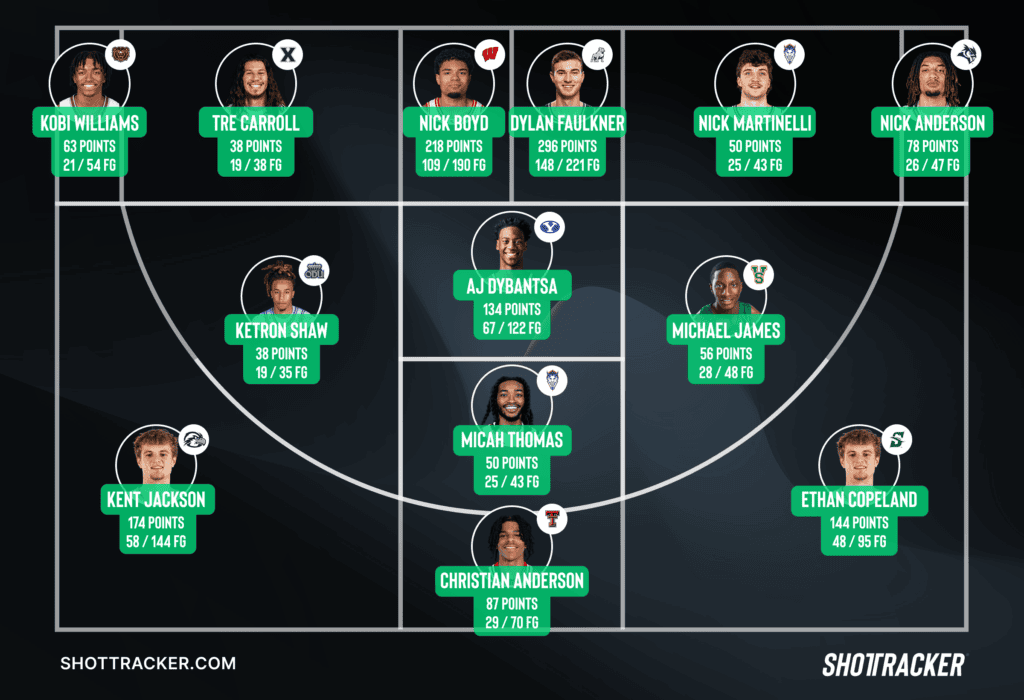
Men’s Overall Top Scorers by Zone: all 13 zones, Zone / Player / Team / Points / FGM / FGA]
- Nick Boyd of Wisconsin led the nation in scoring from Zone 1 (left restricted area) with 218 points on 109-of-190 shooting. That is notable on its own, but more so because Boyd is a guard. Bigs dominate restricted area production across Division I, so a guard accumulating that volume near the basket reflects a genuine finishing skill worth tracking heading into 2026-27.
- AJ Dybantsa led the NCAA in scoring from Zone 3 (non-restricted-area paint) with 134 points on 54.9% shooting. For a player who went No. 1 in the 2026 NBA Draft, his efficiency inside was one of the more underappreciated parts of his one college season.
- Christian Anderson ranked first among all Division I players in Zone 11 (top of the key three-point zone), scoring 87 points on 27 made three-pointers in his final season at Texas Tech. He is a player NBA teams will need to account for from that area going forward.
Top Scorers by Zone – Transfers
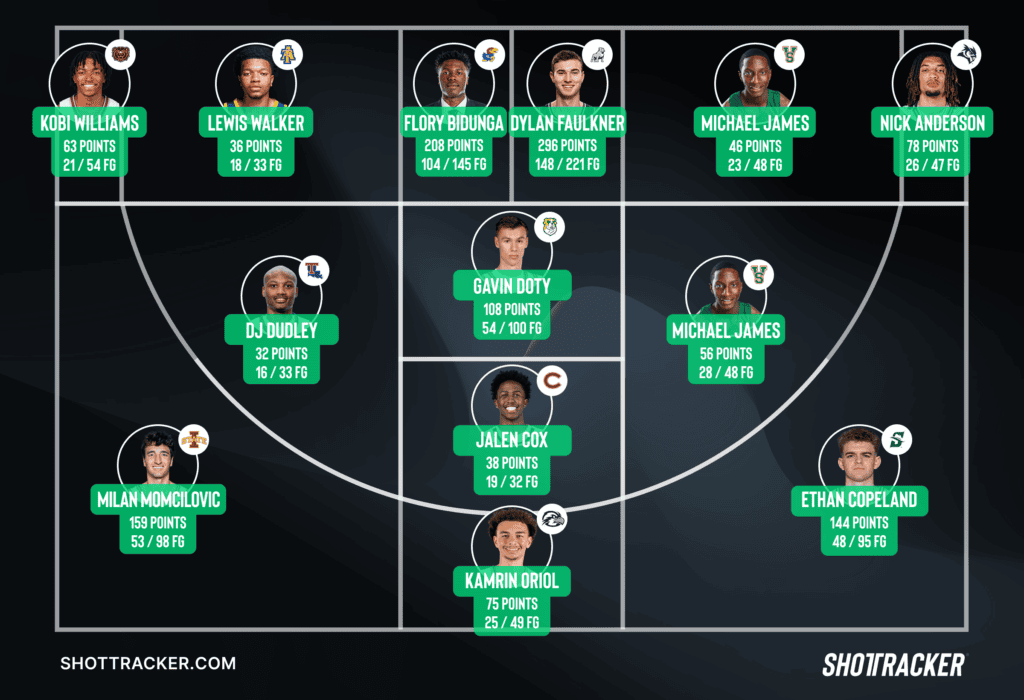
- Flory Bidunga led all Division I transfers in Zone 1 (left restricted area) scoring with 208 points, converting 104 of 145 attempts for a 71.7% mark. He brought that production from Kansas and is now at Louisville, where the ACC will be seeing a lot of him near the basket.
- Gavin Doty led all transfers in Zone 3 (non-restricted-area paint) with 108 points, following his head coach from Siena to Syracuse. The context matters here: Siena gave Duke a serious scare in the first round of the NCAA Tournament, and Doty was a central reason why.
- Milan Momcilovic scored 159 points from Zone 10 (left wing three-point zone) at Iowa State last season on 54.1% shooting. He has moved to Kentucky, where his perimeter efficiency from the left side gives the Wildcats a reliable option from that area of the floor.
Top Scorers by Zone – Returners
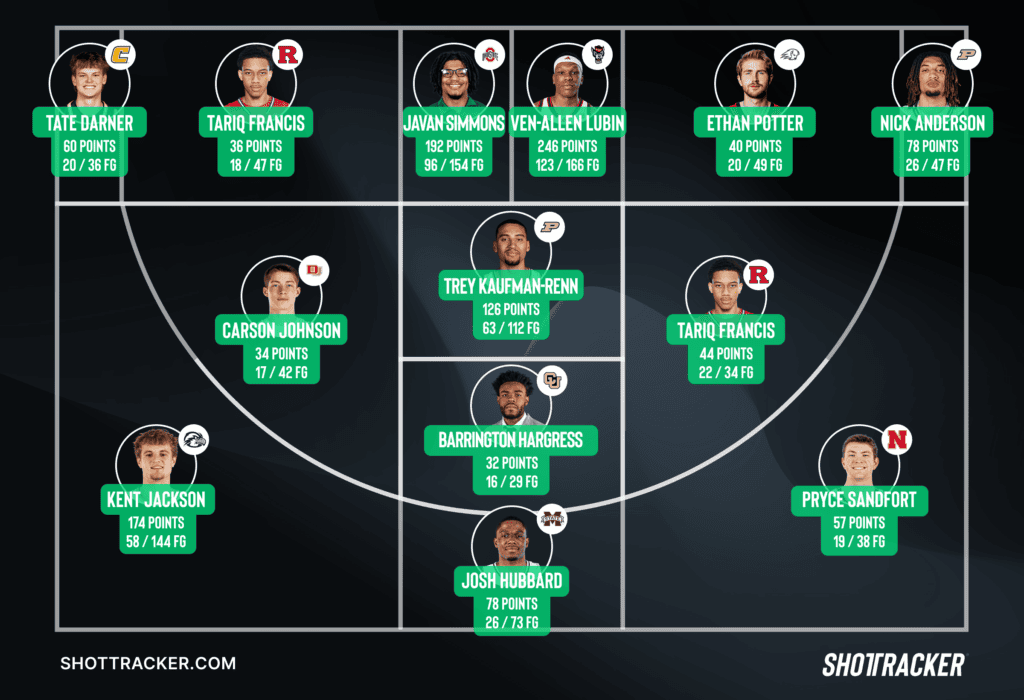
- Ven-Allen Lubin returns to NC State for a fifth season after finishing with 246 points from Zone 2 (right restricted area) on 74.1% shooting. That finishing rate over that volume of attempts is one of the more impressive interior efficiency numbers in Division I men’s basketball heading into next season.
- Josh Hubbard has been consistent for Mississippi State across his first three seasons and was at his best from Zone 11 (top of the key three), where he totaled 78 points last season. He enters 2026-27 as one of the more reliable top-of-the-key scorers returning to the SEC.
- Pryce Sandfort led the Big Ten in three-pointers made during 2025-26 and generated 132 points from Zone 12 (right wing three-point zone), the highest total among any returner staying with the same program. He is back at Nebraska for another season as one of the conference’s premier wing shooters.
Women’s Basketball
Top Scorers by Zone (Overall) – 2025-26 Season
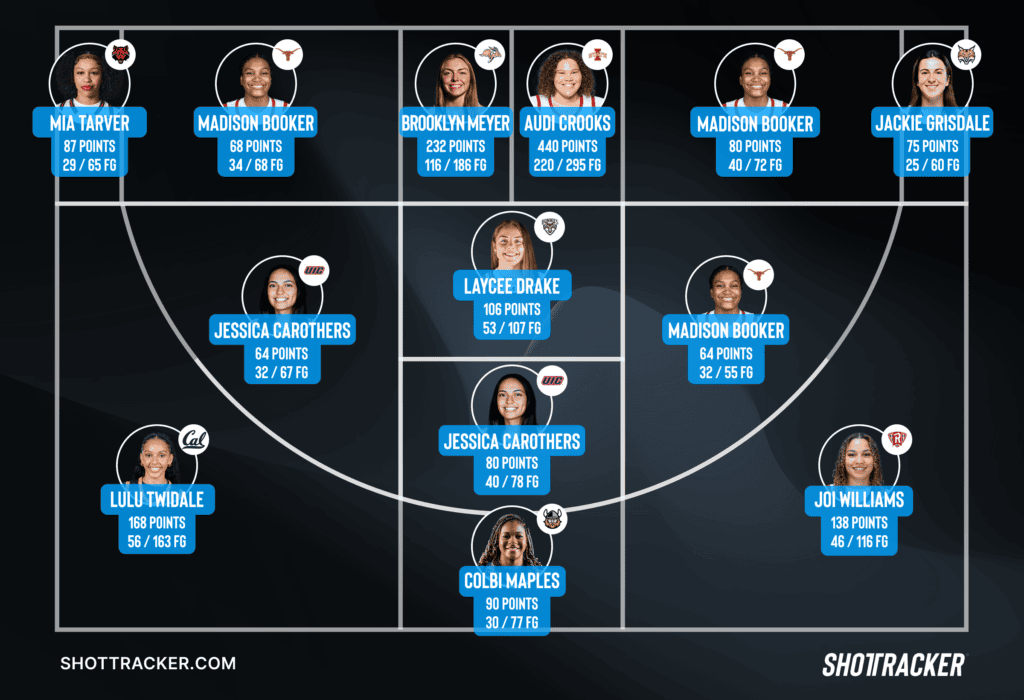
- Brooklyn Meyer led Division I women’s basketball in Zone 1 (left restricted area) scoring with 232 points, converting 116 of 186 attempts (62.4%). The Summit League’s leading scorer at 22.6 points per game built a significant portion of that production close to the basket.
- Laycee Drake of St. Bonaventure led the nation in Zone 3 (non-restricted-area paint) with 106 points on 49.5% shooting. Her efficiency from that zone was among the best at the college level, and she paired it with consistent midrange production throughout the season.
- Lulu Twidale led all Division I women’s players in Zone 10 (left wing three-point zone) with 168 points on 56 made threes. She returns to California for her senior season as one of the most productive left-wing shooters in the country.
Top Scorers by Zone – Transfers
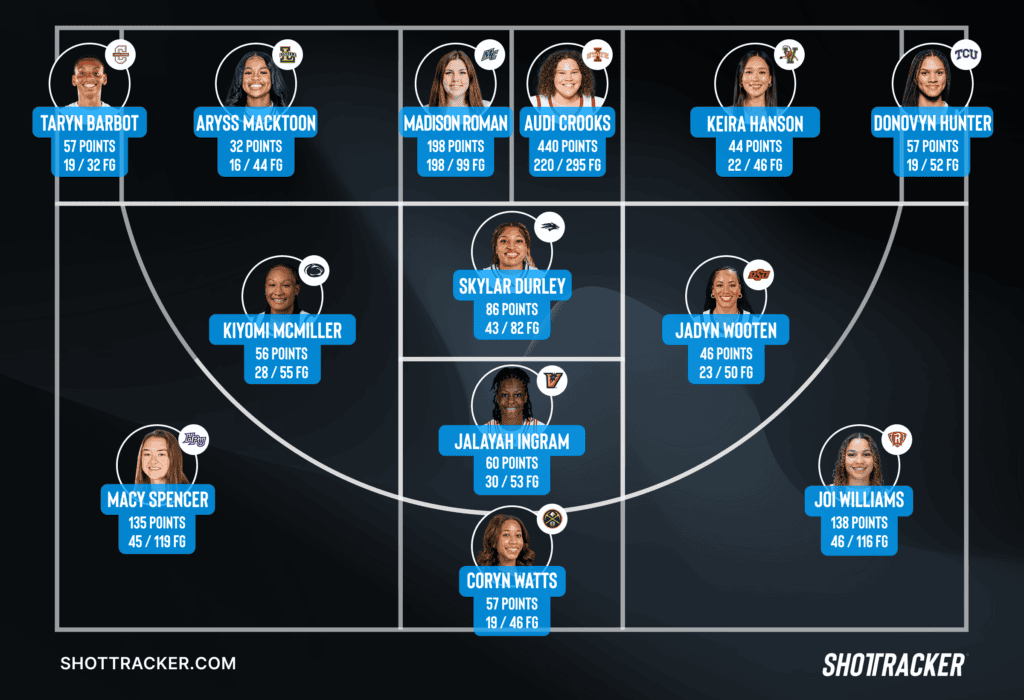
- Audi Crooks led all Division I women’s players in Zone 2 (right restricted area) with 440 points on 74.6% shooting at Iowa State. She is now at Oklahoma State, where a fast-paced offense should give her consistent opportunities to operate in the same spot that produced those numbers.
- Donovyn Hunter scored 57 points from Zone 13 (right corner three-point zone) at TCU, connecting on 19 of 52 attempts (36.5%). She moves from the Big 12 regular season champion Horned Frogs to the defending national champion UCLA Bruins, where her shooting from the corner gives the roster an immediate perimeter option.
- Kiyomi McMiller was one of the top three scorers in the Big Ten last season at Penn State and was especially effective in Zone 5 (left short corner), where she shot better than 50%. She heads to Florida, where that midrange efficiency will be a new element for the Gators’ offense.
Top Scorers by Zone – Returners
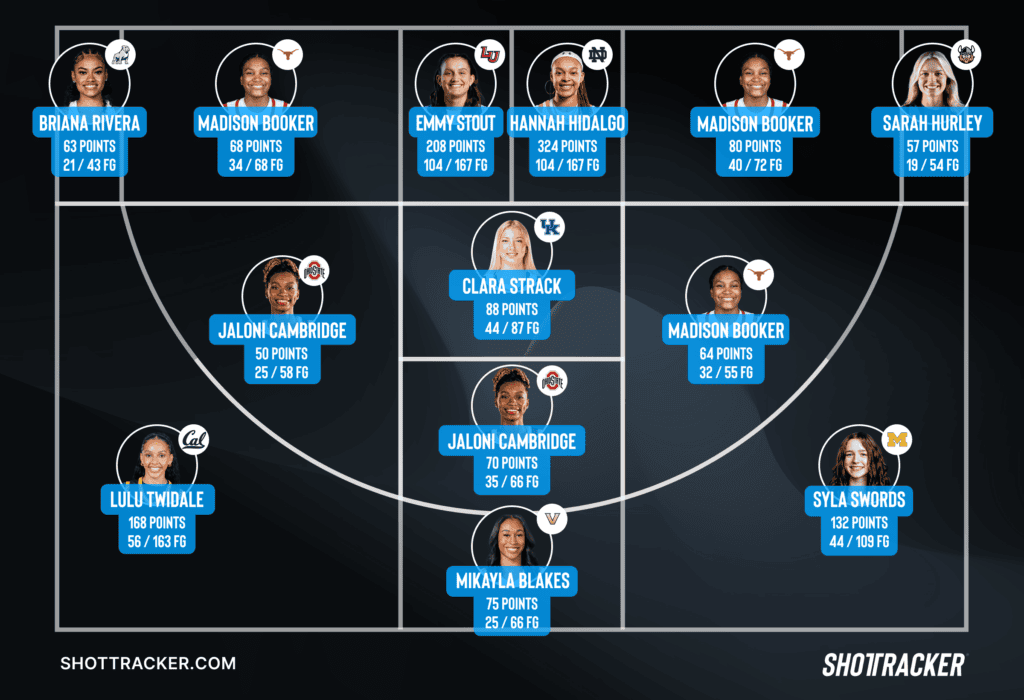
- Hannah Hidalgo returns to Notre Dame having led the nation with 324 points from Zone 2 (right restricted area) on 162 made field goals. She was relentless attacking the basket throughout the season and comes back as one of the most productive finishers in college basketball.
- Madison Booker has made the short corner her most productive area at Texas. She combined for 148 points from Zones 4 and 7 (left and right short corners) last season and enters her senior campaign with that area of the floor firmly established as her most dangerous scoring zone.
- Jaloni Cambridge led all returners in scoring from two separate midrange zones for Ohio State, demonstrating a versatility in that part of the floor that is genuinely uncommon at the college level. Her ability to score from multiple midrange spots makes her one of the harder guards to defend in the Big Ten.
All data sourced from ShotTracker Scout. Statistics cover Division I men’s and women’s basketball from the 2025-26 season. Minimum attempt thresholds apply.
Want to see zone scoring data for your program or the players you are evaluating? Learn more about ShotTracker Scout at shottracker.com.