In Part 1, we explored how shot mix and efficiency differ between college and professional basketball — and saw that the pros separate themselves through precision rather than volume. In this section, we’ll look closer at how teams across each league fall into unique offensive archetypes, and what those patterns tell us about success. Using a cluster analysis, we grouped every team into one of four archetypes:
- High Paint – teams generating most of their looks near the rim.
- High Mid-Range – teams relying on pull-ups and jumpers inside the arc.
- High 3PT – teams spacing the floor and maximizing perimeter volume.
- Balanced – teams splitting their shots between the paint and the perimeter, with a lower mid-range share.
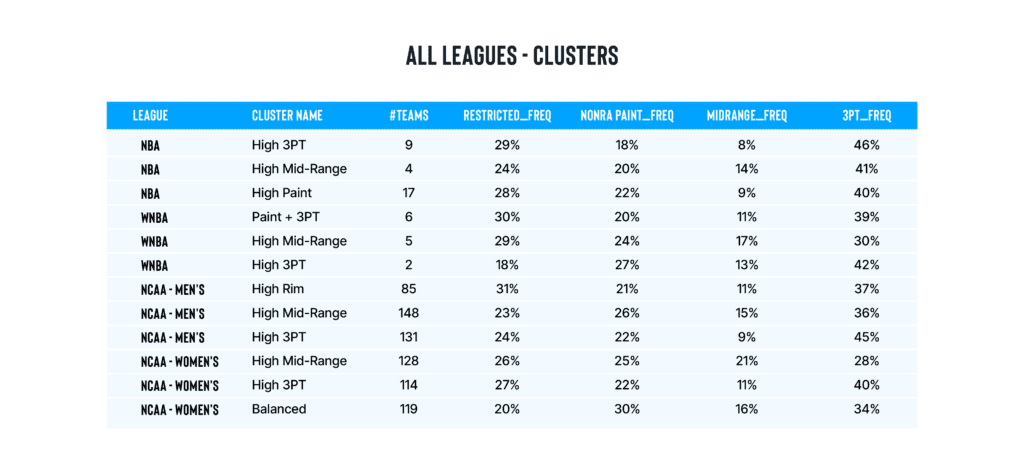
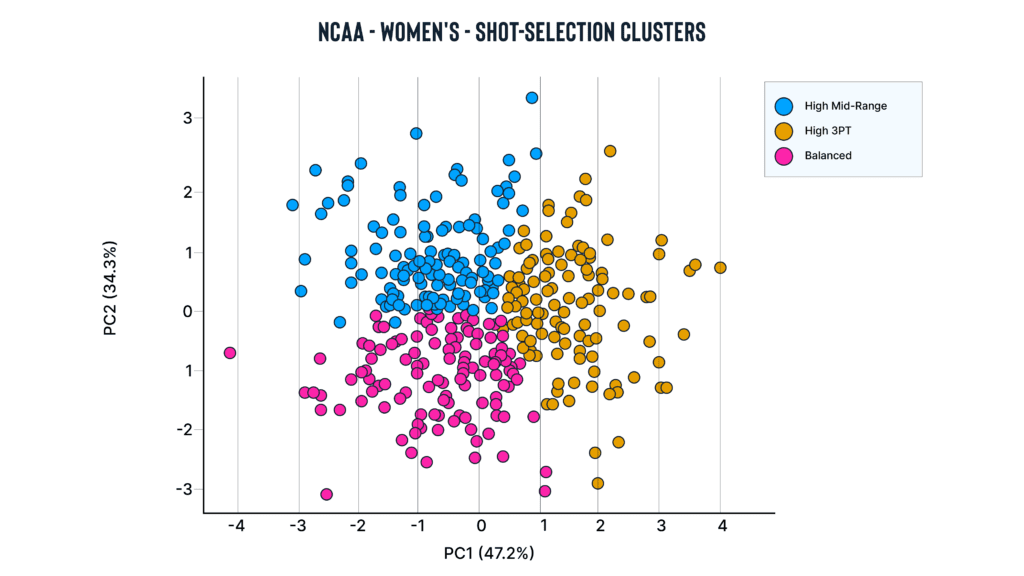
Each league had a High-3PT and a High Mid-Range cluster, and a 3rd cluster that was unique to them. The professional leagues showed a low concentration of teams in the High 3PT cluster, while Division I had its highest concentration in the High Mid-Range cluster.
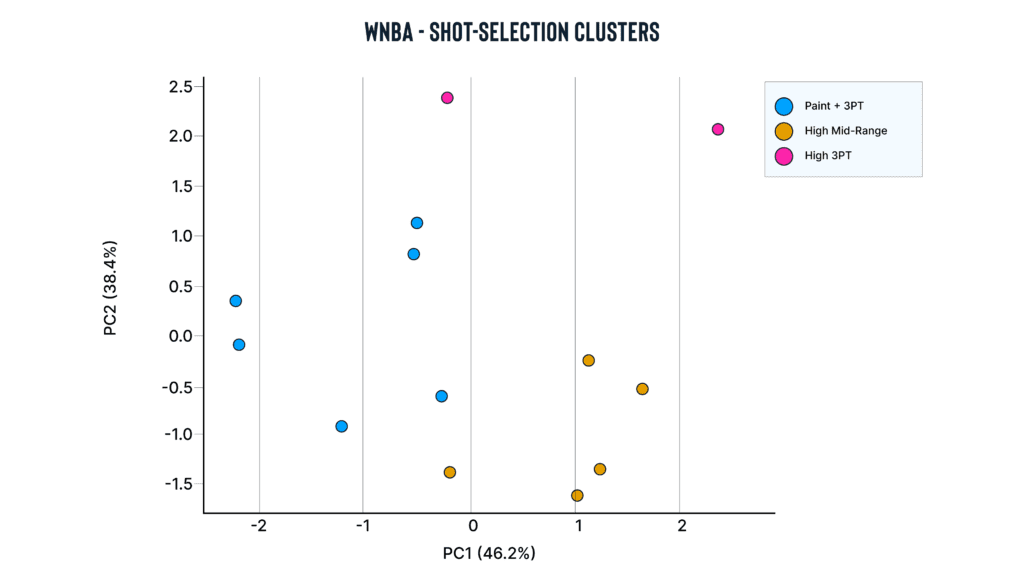
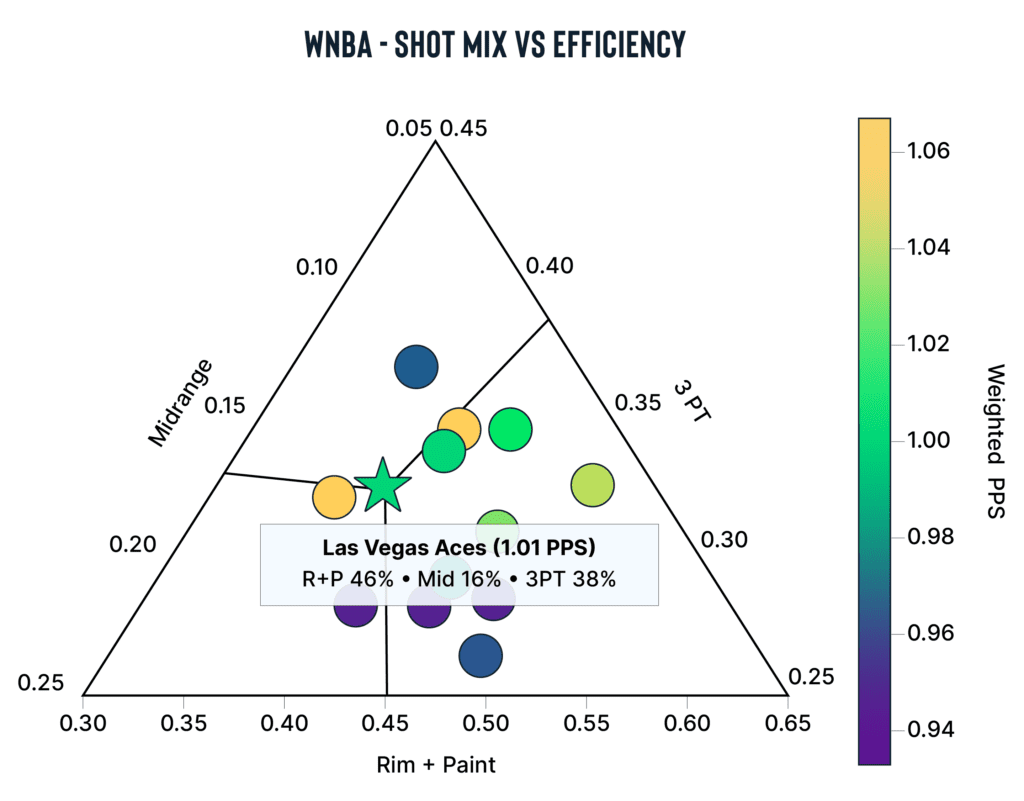
In the WNBA & women’s college basketball, mid-range shooting remains a real weapon. WNBA champion Las Vegas Aces maintained efficiency over 0.85 PPS from mid-range and 0.91 PPS in the non-restricted paint area thanks to MVP A’ja Wilson.
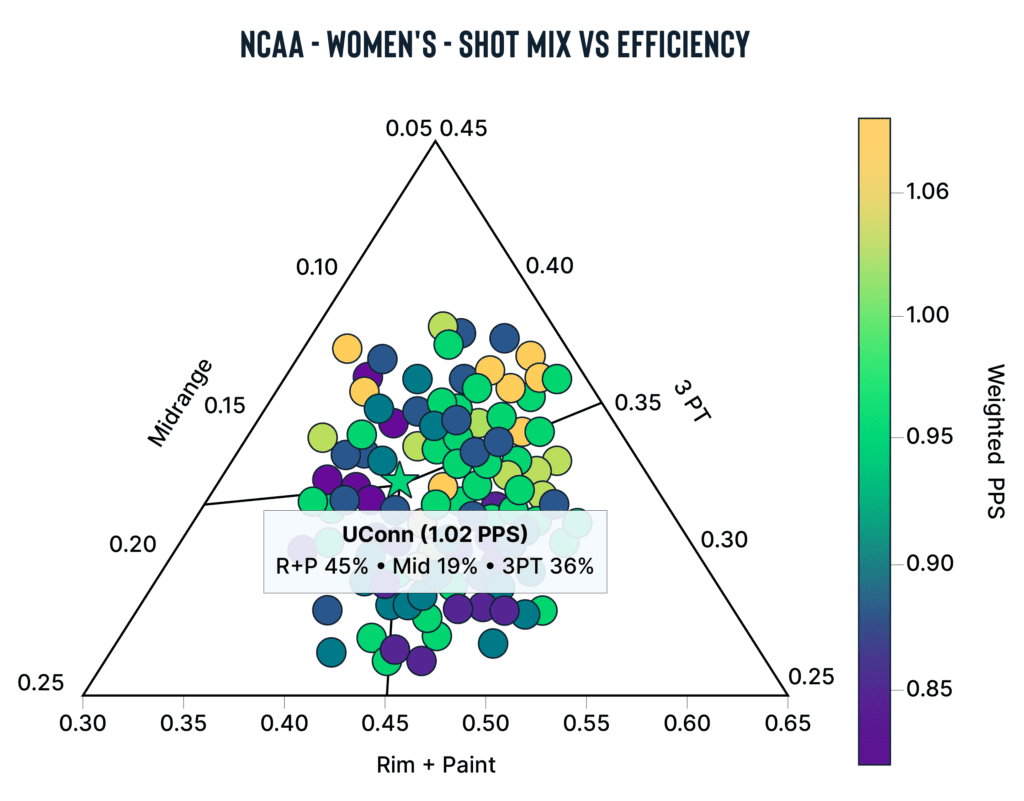
National champions UConn were top 8 in PPS across every zone and led Division I in mid-range with 0.936 PPS, powered by their own superstar Paige Bueckers.
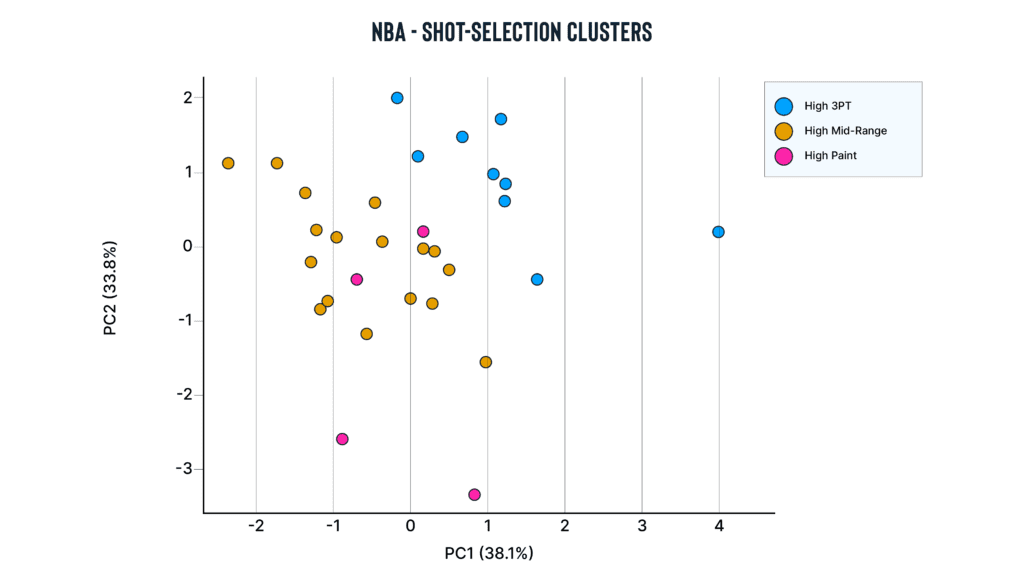
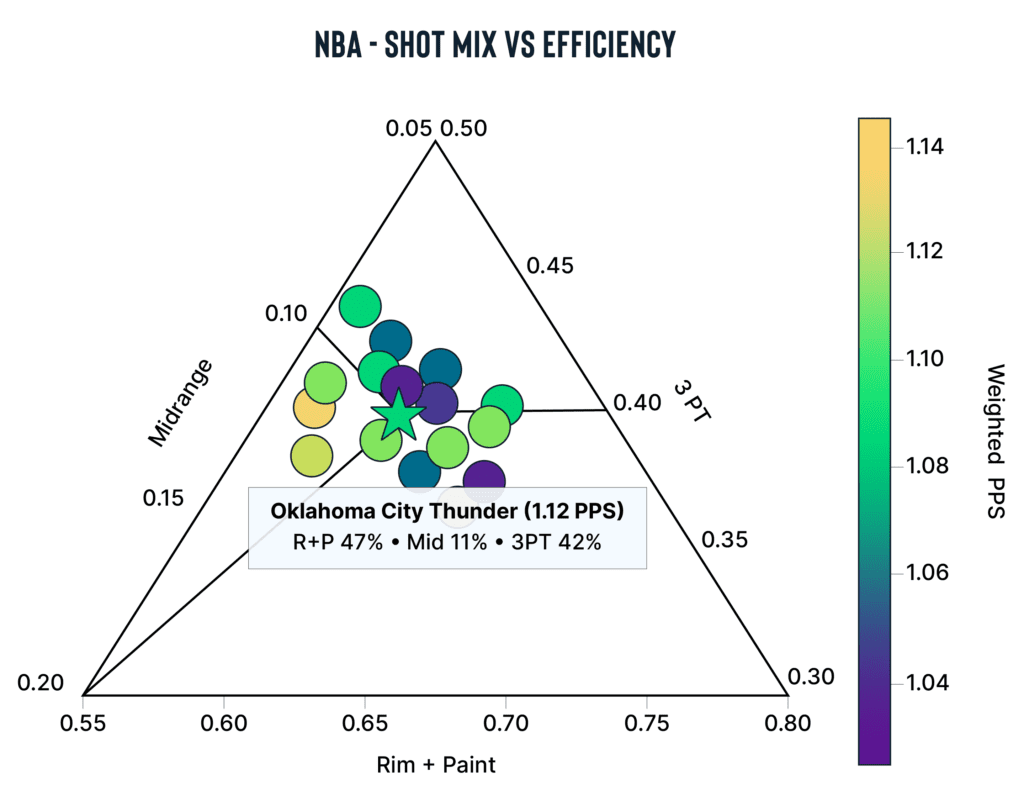
On the men’s side, we see a similar story, with our NBA champions falling near the middle of the pack on shot frequencies by zone but landing in the top 10 in PPS for all zones. We do know that last year, the Oklahoma City Thunder were an elite defensive team, and having MVP Shai Gilgeous-Alexander leading the young, talented core helped put them on a championship trajectory.
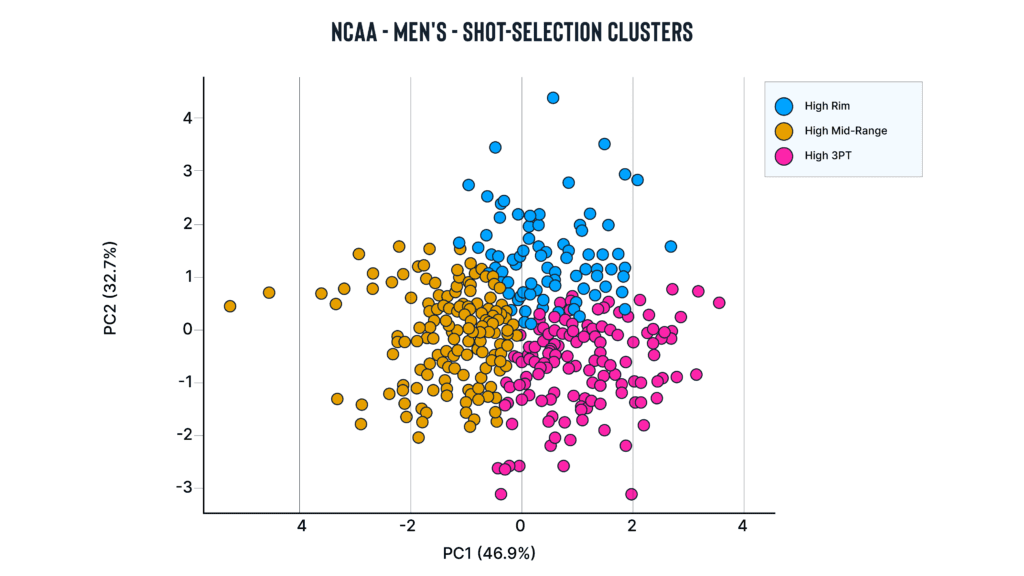
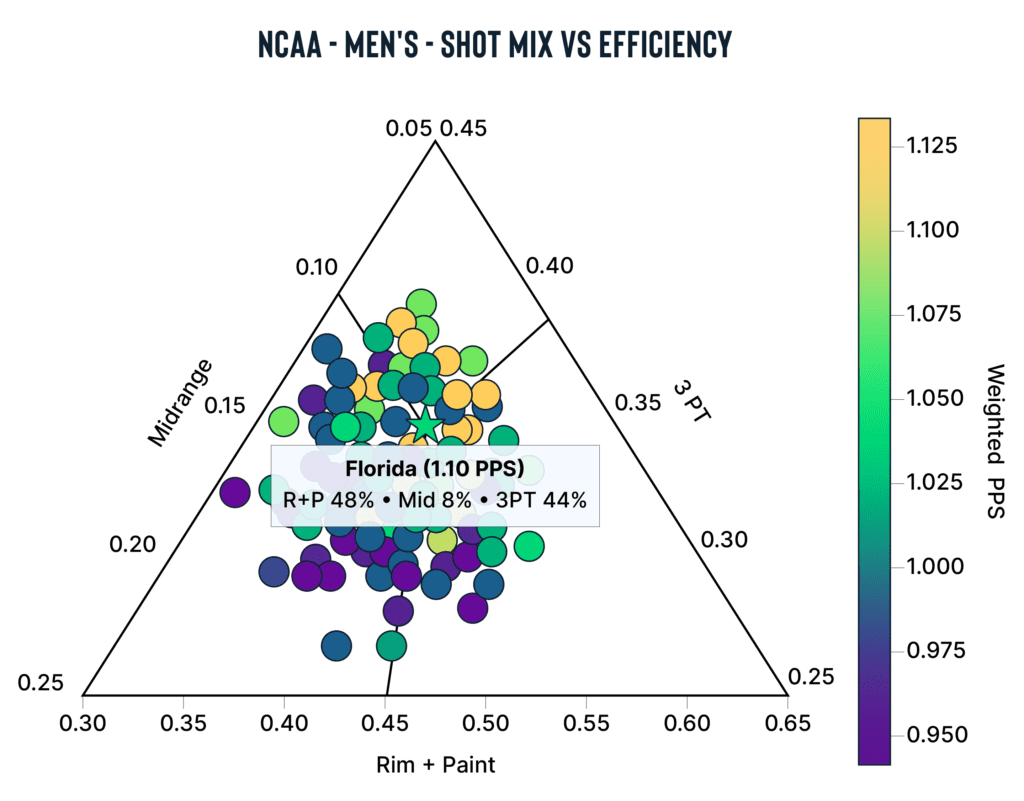
In college, Florida fell lower on the mid-range frequency, relying on a more balanced approach between shots in the paint – particularly at the rim – and three-pointers. Their 1.10 PPS was good for the top 10% in Division I
As seen in the ternary plots above, both champions on the women’s side fall near the center of their fellow league members. This demonstrates that the elite teams within each league have a fairly balanced shot mix, but separate themselves through elite shooting in each zone.
So what conclusions can we draw about shot mix and efficiency? Basketball doesn’t reward uniformity – it rewards efficiency. Our clustering analysis shows that while the path to high-level offense looks different across leagues, the best teams find a sustainable rhythm between paint pressure, mid-range selectivity, and perimeter accuracy. There’s no one perfect shot mix – only the one that teams can execute at an elite level.